
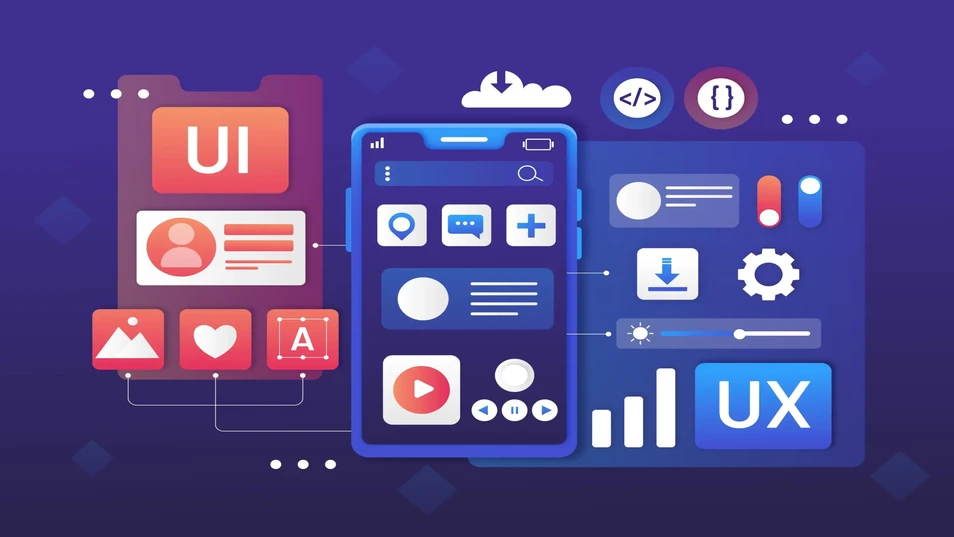
When a user first visits your website, the initial impression they form is largely shaped by the UI/UX of your webpage. This impression speaks volumes about your company as a whole. That’s why a strong first impression is crucial for user retention especially in a market where many competing products may offer similar features.
UI/UX isn’t just about how your website looks, it’s also about how it works and feels for the user. It’s the overall experience someone has when interacting with your site. Good UI/UX means more than a clean design, it means users can easily find what they need, click the right buttons, and move through the site without confusion or frustration.
Understanding UI & UX: More Than Just Buzzwords
Before diving into the benefits of UI/UX, let’s first understand what these terms really mean.
UI (User Interface) refers to the visual layout and interactive elements of a website like buttons, menu, typography, color schemes, and more. It includes everything a user sees and interacts with. A well-designed UI is visually appealing and consistent, guiding users smoothly through the digital experience.
UX (User Experience), on the other hand, focuses on how a product or website feels to use. It’s about the overall ease and satisfaction that users experience. UX design involves user research, journey mapping, wireframing, and testing to make sure users can accomplish their goals with minimal friction.
UI and UX are deeply interconnected. A visually stunning site with poor usability will frustrate users, while a functional site with poor design might be ignored. When harmonized, UI and UX elevate each other to create powerful, user-centric experiences.
The Tangible Benefits of Prioritizing UI/UX
Focusing on good UI/UX design brings many real benefits to your website and business. Here are some of the most important ones:
Better User Satisfaction and Engagement
Good UI/UX makes your website easier and more enjoyable to use. When people can find what they’re looking for quickly and without frustration, they’re more likely to stay longer and come back again later. This helps build stronger engagement and loyalty to your brand.
Higher Conversions and Business Results
A well-designed website can help more visitors take action like signing up, buying something, or contacting your team. When the site is easy to use and guides people clearly, they’re less likely to leave halfway. This means better results for your business.
Stronger Brand Image and Trust
UI/UX also affects how people see your brand. A clean, professional website shows that you care about your users and pay attention to detail. This helps build trust because if your site is well-made, people are more likely to believe your services are too.
Lower Development Costs in the Long Run
When you focus on UI/UX from the start, you’re less likely to face major problems later. This means fewer redesigns, less time fixing issues, and lower costs overall. Planning well at the beginning saves a lot of time and money.
A Competitive Edge in a Crowded Market
Many websites offer similar products or services, so user experience can be what sets you apart. A smoother, more enjoyable website helps you stand out and keeps people coming back, giving you an advantage over competitors.
Common UI/UX Pitfalls to Avoid
Overlooking User Research
Designing a website isn’t just about what you like, it’s about what most users want. Doing research before designing is very important. It helps you learn from common mistakes and base your design on real data, not just guesses. This way, your website will work well for a long time, reducing the need for constant redesigns that waste time and money.
Neglecting Mobile Responsiveness
Today, people use many different devices like phones, tablets, desktops with different screen sizes. Your website must look good and work well on all of them. A mobile-responsive design ensures users have a smooth and engaging experience, no matter what device they use.
Cluttered Interfaces and Information Overload
Your website should provide all the important information users need, but it shouldn’t be crowded or overwhelming. Too much information packed together can confuse visitors and make it hard to decide what to focus on. Keep the layout clean and organized so users can find what they want easily.
Inconsistent Design Elements
Consistency is key in design. Using different fonts, colors, or styles throughout your site makes it look messy and unprofessional. Sticking to a consistent color scheme and style not only looks better but also helps build your brand identity and keeps users focused.
Integrating UI/UX into Your Agency’s Workflow
To truly get the benefits of UI/UX, it needs to be a part of your agency’s process from the very beginning. Here’s how to do that effectively:
Emphasizing User Research and Persona Creation
To create better UI/UX, start by understanding your users. This can be done through surveys, user interviews, or feedback forms. By analyzing this data, you can learn what users want, what frustrates them, and how they behave. From there, create detailed user personas fictional profiles that represent different types of users. These personas help guide design decisions based on real user needs, not assumptions.
Iterative Design and Prototyping
Instead of designing everything at once, use an iterative approach to build and test one feature or section at a time. This allows you to spot problems early, improve continuously, and stay flexible. You can also use prototypes to test ideas before full development. This saves time and makes changes easier to manage.
User Testing and Feedback Loops
Involve users during the design and development process. Run tests like usability testing (where real users try tasks while you observe) or A/B testing (comparing two versions to see which performs better). These methods help you spot what works, what doesn’t, and what needs improvement before the site is fully launched. Collect feedback regularly and use it to refine your designs.
Cross-functional Collaboration (Designers, Developers, Marketers)
UI/UX isn’t just the designer’s job, it needs input from everyone. Designers, developers, and marketers should work together from the start to make sure the design, functionality, and messaging all align. Collaboration helps avoid miscommunication, speeds up the process, and ensures the final product meets business and user goals.
Conclusion
UI/UX is a non-negotiable investment when it comes to building a successful website. It reflects your brand’s values, shows professionalism, and makes users feel that their time and experience matter. A clean, easy-to-use interface not only attracts attention but also keeps users engaged and builds trust, which leads to long-term loyalty. A strong UI/UX foundation helps your website perform better over time and reduces the need for frequent redesigns. More importantly, it puts the user at the center of everything, a crucial step as we move toward the future of user-centric web development. Thus, agencies that prioritize user needs through thoughtful UI/UX will stand out, delivering digital experiences that are not only visually appealing but also meaningful, effective, and built for long-term success.
Share
Ready to bring AI into your business
We’d love to hear from you — let’s start the conversation today.
Let’s Talk