
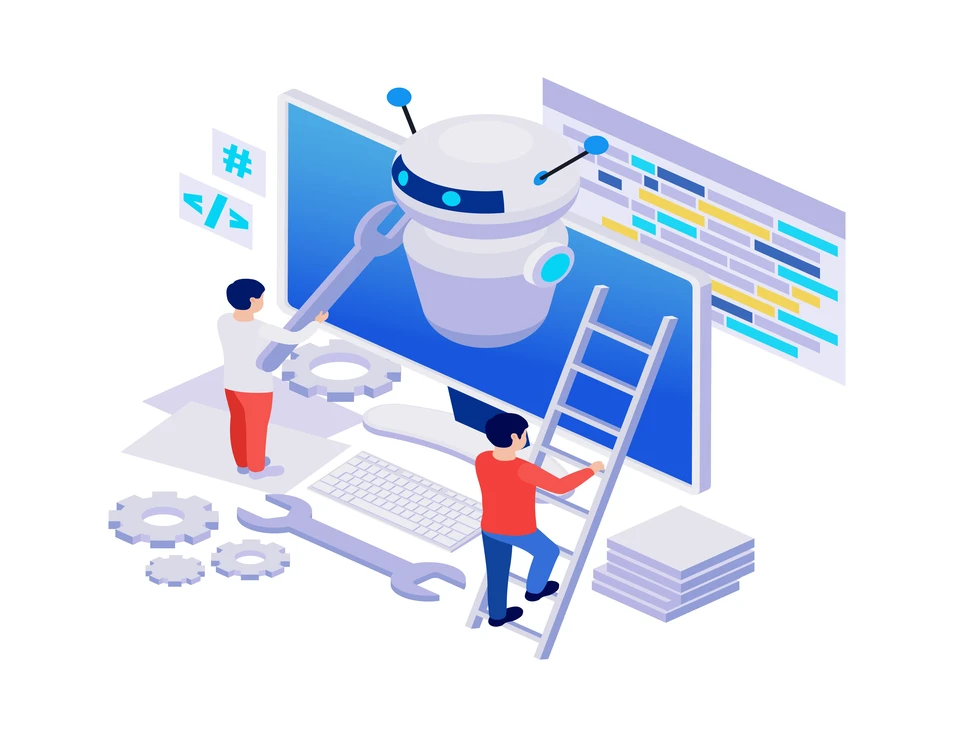
Automation has become a major part of how businesses improve productivity and reduce manual work. But not all automation is the same. Many companies start with traditional scripting using code to handle simple, rule-based tasks. As technology grows, however, Robotic Process Automation (RPA) has become a smarter and more flexible option. It allows businesses to automate not just basic actions but also complex workflows that involve multiple systems and decisions. In this section, we’ll explore the differences between traditional scripting and RPA, how AI enhances automation, and why human oversight still plays an important role.
Defining the Limits: Traditional Scripting and Rule-Based Automation
Traditional scripting is the most basic form of automation. It works well for simple, repetitive tasks that always follow the same pattern. A developer writes a script with a set of rules, and the computer follows those instructions every time.
However, this method has limits. Traditional scripts can’t easily handle changes or exceptions. If a small detail in the process changes the script often breaks and needs manual fixing. It also struggles to work across multiple applications unless they’re directly connected.
RPA, on the other hand, is designed to mimic how humans use software. This makes RPA more flexible than basic scripts because it can interact with many different systems.
RPA vs. Intelligent Process Automation (IPA): Moving Beyond Mimicking Human Clicks
While RPA can automate many repetitive processes, it mostly follows predefined rules. Intelligent Process Automation (IPA) takes it a step further by combining RPA with AI and machine learning. This combination allows automation to not just mimic actions but also make smarter decisions.
The result is a more adaptable automation system that can handle changing situations and learn over time. This evolution from basic RPA to IPA marks an important shift from task automation to process intelligence.
Leveraging AI/ML for Cognitive Tasks, Complex Decision-Making, and Unstructured Data
AI and ML make automation capable of handling tasks that used to require human judgment. These technologies allow systems to read unstructured data and extract useful information automatically.
For example, an AI-powered RPA tool can process invoices in different formats, identify the key details, and match them to purchase orders. It can even flag errors or unusual patterns for human review. This combination of speed and intelligence reduces manual workload while keeping accuracy high.
Over time, machine learning models improve by learning from past data, making automation smarter and more reliable.
The Role of Generative AI in Content Creation, Code Generation, and Automated Summarization
Generative AI adds another layer of power to automation. It can create text, code, or even summaries automatically based on instructions or data.
In technical environments, it can even assist developers by writing small pieces of code or suggesting automation logic. This reduces development time and helps teams move faster. When integrated with RPA, generative AI makes automation more creative, flexible, and human-like in how it handles information.
The Strategic Mandate: Holistic Business Process Transformation and Human Oversight
Even with all these advances, automation works best when combined with human oversight. This approach ensures that people remain in control of critical decisions. Humans provide context, handle exceptions, and guide improvements over time.
Businesses should see RPA and AI not as tools to replace humans, but as ways to free them from repetitive tasks. This shift allows employees to focus on strategy, creativity, and customer interaction which are the things automation can’t fully replicate.
True success in automation comes from viewing it as part of a bigger digital transformation strategy. It’s not just about saving time; it’s about redesigning workflows, improving accuracy, and building smarter systems that grow with the business.
Conclusion
The move from traditional scripting to RPA and now to AI-powered automation represents a huge leap in how organizations operate. Traditional scripts are simple and effective for small tasks, but RPA and IPA bring scale, flexibility, and intelligence.
By combining automation with human oversight, companies can achieve both speed and reliability. In the end, the goal isn’t just to automate processes but to create a smarter, more connected, and future-ready business environment.
Share

Ready to bring AI into your business
We’d love to hear from you — let’s start the conversation today.
Let’s Talk