
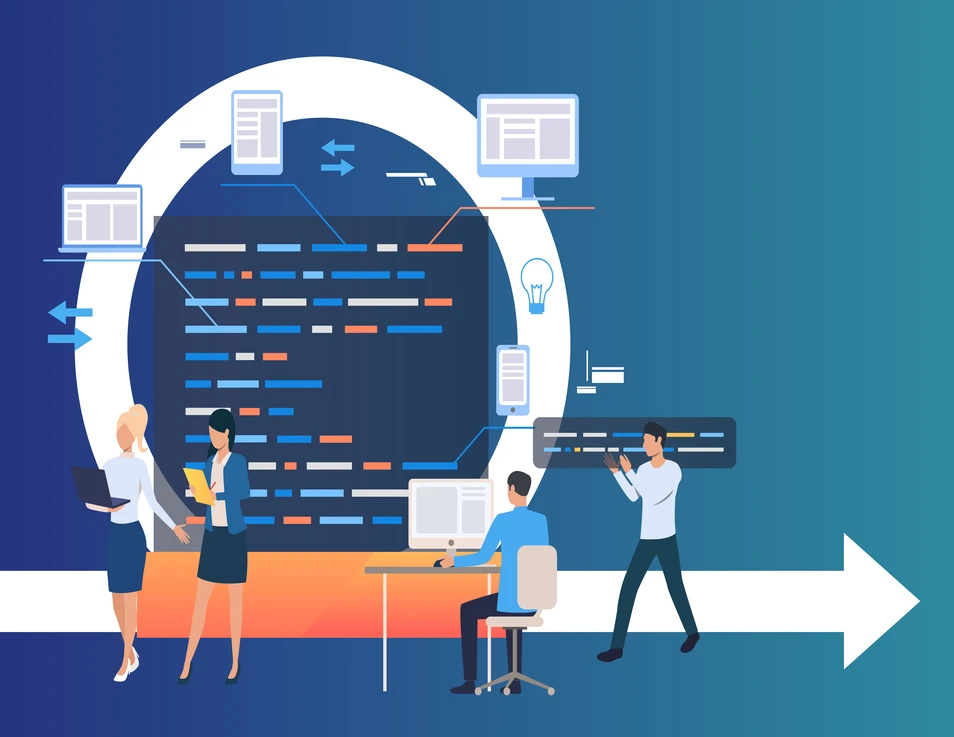
In the fast growing world of technology, businesses must release new products and updates quickly to stay ahead of their competitors. However, speed alone is not enough, the product also needs to be reliable and high quality. This is where Continuous Integration/ Continuous Deployment (CI/CD) come in. Together, they help software teams work faster, find problems early, and deliver updates more smoothly. In the following sections, we’ll explore how CI/CD improves development speed, ensures quality, and helps businesses bring their products to market faster.
Establishing Rapid Feedback Loops
One of the biggest advantages of CI/CD is the ability to create rapid feedback loops. In a traditional software process, developers write code for weeks or months before testing it. By that time, errors have already spread, making them harder and more expensive to fix.
With Continuous Integration, every time a developer adds or updates code, the system automatically tests it. If there’s an error, the developer gets feedback immediately. This means mistakes are caught early before they affect the entire project. These small, frequent updates keep the project stable and reduce stress during final release stages.
The Role of QA Automation Tools
In CI/CD pipelines, testing is largely handled by automation tools. Programs like Selenium, Cypress, and JUnit automatically check whether the software works as expected after each code change.
In the past, quality assurance (QA) teams had to manually test every part of the software by clicking buttons, checking pages, and repeating the same steps hundreds of times. Now, automation tools perform these tasks in minutes, saving time and reducing human error.
Automation also allows for continuous testing, even overnight or during weekends. This ensures that problems are found as soon as they occur. As a result, the software remains stable and developers can focus on building new features rather than fixing old ones.
The Shift-Left Strategy
Another key concept in CI/CD is the Shift-Left Strategy. In traditional software development, testing happens at the end of the project, after most of the code has been written. This often leads to late discovery of bugs, which can cause delays and unexpected costs.
The Shift-Left Strategy means testing starts much earlier or “shifts left” on the project timeline. Developers test their code as they write it, ensuring errors are caught right away. This makes fixing issues faster, easier, and cheaper.
Continuous Delivery and Deployment
Continuous Delivery (CD) takes CI a step further. Once all tests pass, the software is automatically packaged and prepared for release. The system ensures that every update is ready to be deployed safely at any time.
Continuous Deployment, on the other hand, goes even further by automatically releasing updates to users once they’ve passed all tests. This means customers receive new features, improvements, and fixes regularly.
With deployment automation, there’s less waiting and fewer manual steps. Each release is smaller, easier to test, and less likely to cause major issues. This approach keeps products fresh and helps companies respond quickly to user feedback.
Balancing Quality and Speed
Some people believe that releasing updates faster means lower quality, but CI/CD proves that isn’t true. Automation and early testing make it possible to maintain high standards while moving quickly. In fact, quality assurance and speed depend on each other. The faster problems are found, the better the final product becomes.
CI/CD encourages teamwork, discipline, and continuous improvement. Developers, testers, and managers all share responsibility for keeping the system reliable and efficient. This mindset helps organizations grow stronger and more adaptable over time.
Conclusion
Continuous Integration and Continuous Deployment have changed how software is built and delivered. They make development faster, smarter, and more reliable. By using automation, quick feedback, early testing, and regular updates, teams can release better software in less time.
For startups and established businesses alike, CI/CD is more than a process, it’s a way to stay competitive in a world where every second counts. It helps teams deliver value faster, satisfy customers sooner, and build a solid foundation for long-term success.
Share

Ready to bring AI into your business
We’d love to hear from you — let’s start the conversation today.
Let’s Talk